
 Our Reviews
 Patient Portal
 Online Bill Pay
Diabetic Foot Ulcers
Diabetic Foot and Ankle Ulcers: A Patient’s Guide
A diabetic foot ulcer is an open sore or wound that occurs in approximately 15% to 25% of people with Diabetes. These ulcers typically develop on the bottom of the foot or the ankle. As Diabetes can cause nerve damage (neuropathy), you may not feel a small cut or blister until it becomes a serious wound.
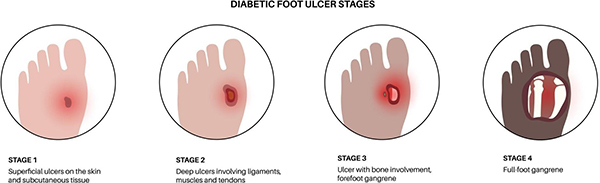
Why Ulcers are Serious
- Reduced Sensation: You might not feel pain, allowing the wound to worsen over time.
- Poor Circulation: Diabetes can narrow blood flow, making it harder for the body to send "healing cells" to the wound.
- Infection Risk: Open wounds are entry points for bacteria, which can lead to bone infections (osteomyelitis) if left untreated.
Conservative Wound Care (Non-Surgical)
The primary goal of conservative care is to "kickstart" healing by removing barriers and reducing pressure.
- Offloading: This is the most critical step. Using a walking boot or specialized shoe to take all weight off the ulcer so it can heal.
- Debridement: A healthcare provider removes dead or infected skin from the wound to promote the growth of healthy new tissue.
- Advanced Dressings: Using specialized bandages that maintain a moist environment, manage drainage, and often contain silver to fight bacteria.
- Infection Control: If an infection is present, your doctor will prescribe oral or IV antibiotics.
- Blood Sugar Management: High glucose levels act as a "brake" on the healing process; keeping sugars stable is essential for recovery.
Surgical Treatment Options
Surgery is considered when an ulcer won’t heal with conservative care, or if there is a structural deformity causing the wound.
- Shaving of the Bone (Exostectomy): If a bony prominence is causing the ulcer, the surgeon can smooth that bone down.
- Achilles Tendon Lengthening: Reducing pressure on the front of the foot by stretching the tight calf muscle.
- Revascularization: A vascular surgeon may perform a bypass or use a stent to restore blood flow.
- Toe or Bone Resection: Removing infected bone to stop the spread and preserve the limb.
Quick Prevention Tips
| Action | Why it Matters |
| Daily Foot Checks | Use a mirror to see the bottom of your feet for redness or blisters. |
| Avoid Barefoot walking | Even inside the house, small pebbles or splinters can cause ulcers. |
| Proper Footwear | Wear moisture-wicking socks and shoes that do not pinch or rub. |
| Dry Between Toes | Excess moisture between toes can lead to fungal infections and skin breakdown. |
When to call a doctor: If you notice drainage on your socks, a foul odor, or a warm, red area on your foot, seek medical attention immediately. Early intervention is the best way to prevent amputation.
Schedule an appointment with Dr Sandhu today to discuss your options!
2120 N. MacArthur Blvd
Irving, TX 75061
Phone :